Exploring the Wasp 3D Multilayer SVG: A Versatile Digital Asset for Laser Cutting and Papercraft
In the evolving landscape of digital crafting, the demand for intricate, ready-to-cut designs has surged among hobbyists and professional makers alike. One standout option in this niche is the Wasp 3D Multilayer SVG 3D Papercut Wasp. This digital product represents more than just a simple vector file; it is a comprehensive design solution engineered for depth, dimension, and versatility. For creators evaluating resources for their next project, understanding the specific attributes of this multilayered design is essential. It serves as a prime example of how modern vector art bridges the gap between traditional paper arts and contemporary CNC manufacturing.
Understanding the Multilayer Design Architecture
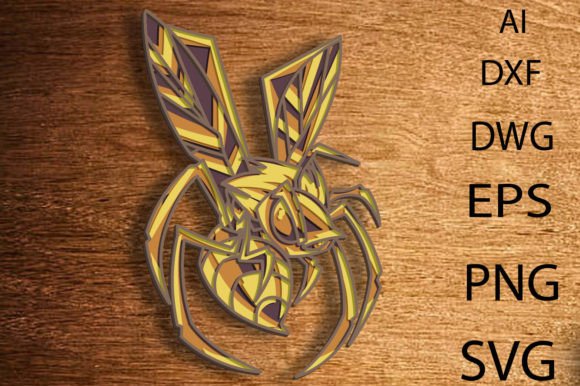
The defining characteristic of the Wasp 3D Multilayer SVG is its structural complexity. Unlike standard two-dimensional clip art or single-layer cut files, this design comprises four separate, distinct layers. This architectural choice is not merely aesthetic; it is functional. In papercraft, these layers allow for the creation of shadow boxes or framed art where each tier adds physical depth. When assembled, the wasp appears to hover above the background, creating a realistic three-dimensional effect that flat images cannot achieve.
For those unfamiliar with layered vector designs, the workflow involves cutting each layer from different materials or colors and stacking them with spacers or adhesive foam tabs. The Wasp 3D Multilayer SVG 3D Papercut Wasp is pre-separated, meaning the user does need to manually isolate elements. This saves significant time and reduces the risk of errors during the preparation phase. The precision required for such a design ensures that when cut correctly, the final product maintains structural integrity while showcasing fine details in the insect’s anatomy, such as wing veins and body segmentation.
Material Versatility: From Paper to Wood and Vinyl
One of the most compelling aspects of this digital asset is its adaptability across various mediums. While the name suggests a primary use for papercutting, the vector nature of the files makes them suitable for a wide range of materials. Evaluating the best material for your project depends on the intended end-use and the tools available.
- Paper and Cardstock: This is the most common application. Using heavy cardstock (80lb to 110lb) provides the necessary rigidity for the layers to hold their shape without sagging. It is ideal for greeting cards, framed wall art, and decorative gifts.
- Wood and MDF: For home decor enthusiasts, the same design can be scaled and cut from thin plywood or medium-density fiberboard (MDF). The four layers create a rustic, textured look suitable for living room accents or office decor. However, users must account for kerf width (the material burned away by the laser) when assembling wooden layers.
- Vinyl and Heat Transfer: The design’s clean lines make it viable for multi-layer vinyl applications. This could be used for clothing decals or vehicle wraps, though simplifying the finest details might be necessary depending on the vinyl type and application surface.
When comparing this to single-layer alternatives, the tradeoff is clear: multilayer designs require more assembly time and material cost but offer a superior visual impact. If you are looking for a quick sticker, a single-layer PNG might suffice. However, for a unique gift for family and friends that demonstrates effort and craftsmanship, the multilayer approach is unmatched.
Compatibility with Cutting Machines and Software
A critical factor in choosing a digital design is software and hardware compatibility. The Wasp 3D Multilayer SVG 3D Papercut Wasp is distributed in a ZIP folder containing multiple file formats, including AI, EPS, PNG, SVG, DXF, and DWG. This broad format support ensures that whether you are using a desktop cutting machine or an industrial CNC router, the file will integrate seamlessly into your workflow.
For users of popular consumer machines like Silhouette Cameo or Cricut Explore/Maker, the SVG and DXF formats are optimal. These formats retain vector data, allowing the machine to follow precise paths rather than pixelated edges. Adobe Illustrator users will appreciate the AI and EPS files, which allow for further editing, color customization, or scaling without loss of quality. Meanwhile, CAD professionals or those using industrial laser cutters may prefer the DWG or DXF formats for their compatibility with engineering software.
It is important to note that while the design is "ready to cut," users must still configure their machine settings according to the material thickness. For instance, cutting four layers of wood requires different power and speed settings than cutting four layers of paper. The digital product provides the geometry, but the maker must apply their technical knowledge to execute the cut successfully.
Dimensions and Scalability Considerations
The finished product dimensions are listed as 11 inches in height and 6.4 inches in width. These proportions create a vertical orientation that is well-suited for standard frame sizes, such as 8x10 or 11x14 inch frames, allowing for adequate matting around the artwork. However, one of the advantages of vector graphics is infinite scalability.
If your project requires a smaller embellishment for a scrapbook page or a larger statement piece for a wall gallery, you can resize the file without compromising resolution. Unlike raster images (such as JPEGs), which become pixelated when enlarged, the SVG and AI files maintain crisp edges at any size. That said, practical limitations exist. If you scale the design down significantly, the smallest details—such as the tips of the wasp’s legs or intricate wing patterns—may become too fragile to cut or weed. Conversely, scaling up excessively may require joining multiple sheets of material if your cutting mat or laser bed is smaller than the expanded design.
Evaluating the Decision: Is This Design Right for You?
Choosing the right digital asset involves assessing your skill level, available tools, and project goals. The Wasp 3D Multilayer SVG 3D Papercut Wasp is an excellent choice for intermediate crafters who have experience with layering and assembly. It offers a high reward in terms of visual appeal but requires patience during the weeding and stacking process.
Consider this design if:
- You own a cutting machine (Cricut, Silhouette, or laser cutter) and are comfortable with multi-step projects.
- You are seeking a unique gift idea that stands out from mass-produced items.
- You enjoy the tactile process of assembling physical layers to create depth.
- You need a file format that is editable for custom color schemes or material adjustments.
However, this may not be the ideal option if you are a complete beginner looking for a five-minute craft. The assembly of four layers requires precision alignment. Additionally, if you do not have access to a cutting machine and plan to cut by hand, the intricate details may prove challenging unless you have advanced knife skills.
Practical Applications and Creative Inspiration
Beyond standard framed art, the versatility of this design invites creative experimentation. For educators, it can serve as a biology-themed project, combining art with lessons on insect anatomy. For event planners, scaled-down versions could function as elegant table centerpieces or place card holders for themed parties. In the realm of fashion, applying the vinyl version to denim jackets or tote bags creates a bold, edgy aesthetic.
The inclusion of PNG files in the package also offers value for digital-only users. Graphic designers can incorporate the wasp imagery into web designs, social media posts, or print-on-demand products without needing to perform physical cuts. This dual utility—physical crafting and digital design—enhances the overall value proposition of the product.
In conclusion, the Wasp 3D Multilayer SVG 3D Papercut Wasp represents a robust resource for makers seeking quality and flexibility. Its four-layer structure provides a tangible sense of depth that elevates simple crafts into sophisticated art pieces. By offering multiple file formats and scalable dimensions, it accommodates a wide array of tools and creative visions. Whether you are decorating your home, creating personalized gifts, or expanding your digital library, this design offers a balanced blend of complexity and usability. As with any crafting endeavor, success lies in matching the tool to the task and taking the time to appreciate the detailed assembly process.